Technology

matoke ROᵀᴹ has been specifically designed to tackle antimicrobial resistance and is a major breakthrough in chronic wound management.

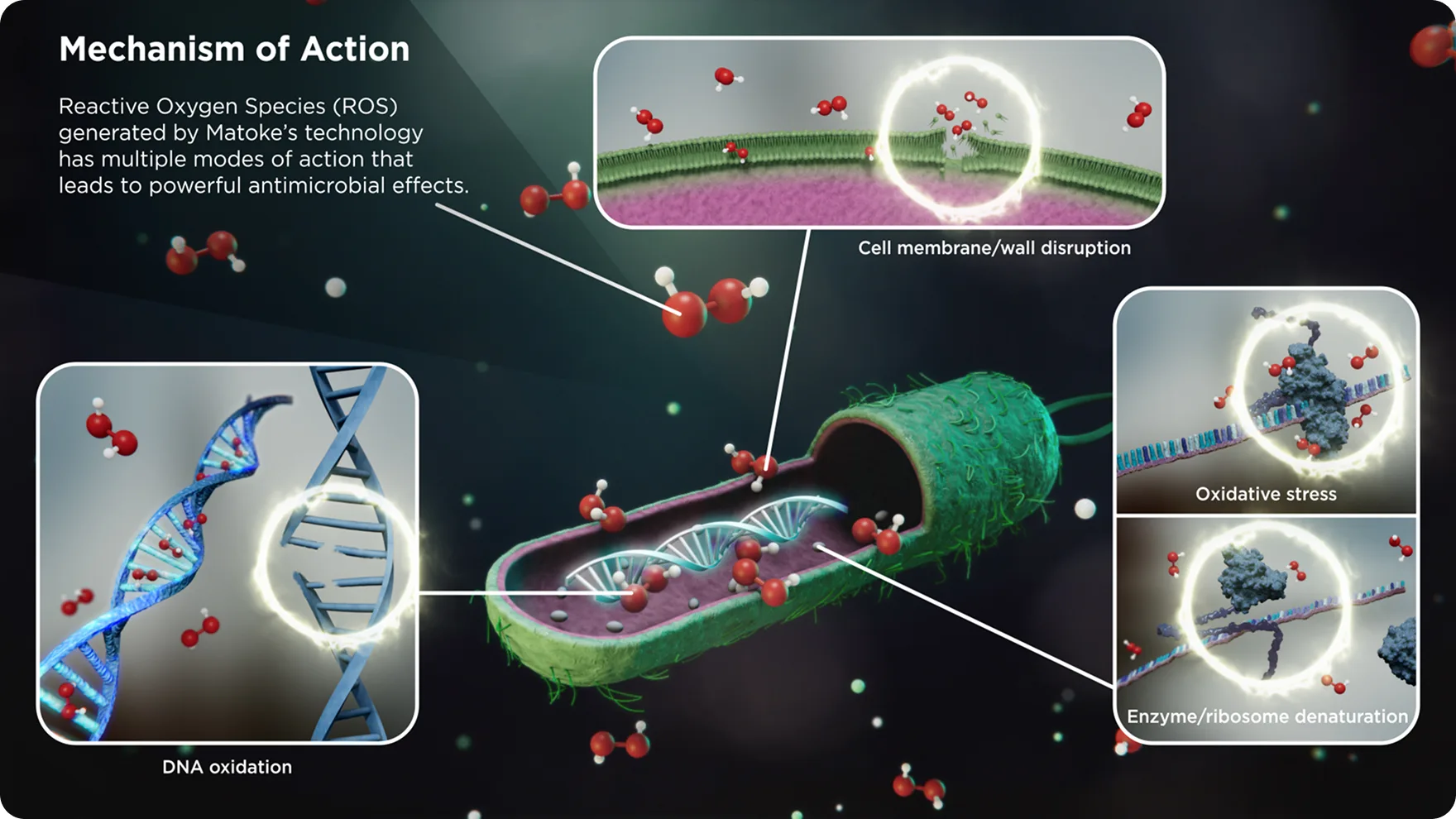
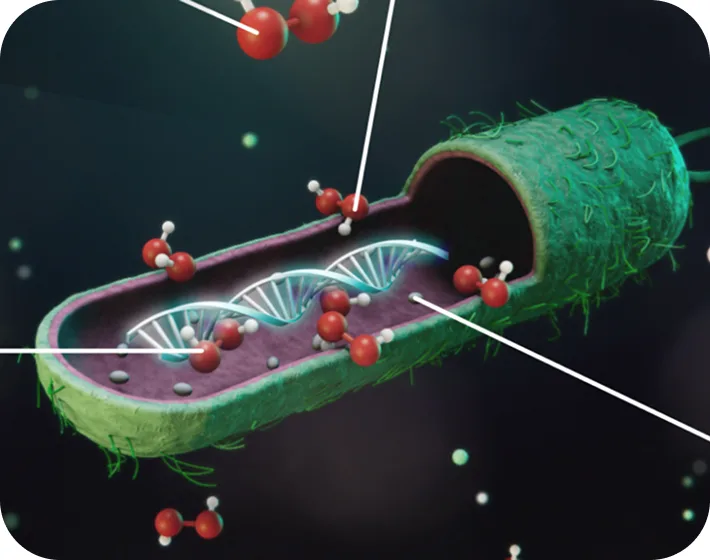
RO Technology generates hydrogen peroxide, an antimicrobial with multiple modes of action. Pathogenic species are overwhelmed by its multiple modes of action and thus cannot find a pathway to antimicrobial resistance.

matoke RO Technology

[6, 9-12]

Antimicrobial Efficacy

On 27 February 2017, the World Health Organization published its first-ever list of antibiotic-resistant “priority pathogens” – a catalogue of 12 families of bacteria that pose the greatest threat to human health.¹⁷

matoke RO Technology is active against all these pathogens.

Most notably, Matoke RO is active against Acinetobacter, Pseudomonas, the newly discovered New Delhi resistant strains (NDM) of the common gut organisms, and the continuing challenge of MRSA. This was demonstrated through different laboratories, including UK Health Security Agency.⁴

References:

  1. Järbrink K, Ni G, Sönnergren H, Schmidtchen A, Pang C, Bajpai R, Car J. Prevalence and incidence of chronic wounds and related complications: a protocol for a systematic review. Systematic Reviews. 2016;5:152. doi:10.1186/s13643-016-0329-y.
  2. Ryder VJ, Chopra I, O’Neill AJ. Increased mutability of staphylococci in biofilms as a consequence of oxidative stress. PLoS ONE. 2012;7(10):e47695. doi:10.1371/journal.pone.0047695.
  3. O’Neill J. Tackling Drug-Resistant Infections Globally: Final Report and Recommendations. Review on Antimicrobial Resistance; London; 2016.
  4. Hind C, Sutton M, Clifford M. Report on Antimicrobial Evaluation of Matoke’s Synthetic Antimicrobial Gel Formulation RO-101 and SurgihoneyRO. UK Health Security Agency; November 2021. Unpublished report.
  5. De Montfort University. DMU – Matoke Final Report. October 2022. Unpublished report.
  6. Dryden M, Cooke J, Salib RJ, Holding R, Pender S, Brooks J. Hot topics in reactive oxygen therapy: antimicrobial and immunological mechanisms, safety and clinical applications. Journal of Global Antimicrobial Resistance. 2017;8:194–198. doi:10.1016/j.jgar.2016.12.012.
  7. Halstead FD, Webber MA, Rauf M, Burt R, Dryden M, Oppenheim BA. In vitro activity of an engineered honey, medical-grade honeys and antimicrobial wound dressings against biofilm-producing clinical bacterial isolates. Journal of Wound Care. 2016;25(2):93–102. doi:10.12968/jowc.2016.25.2.93.
  8. Dryden MS, Cooke J, Salib RJ, et al. Reactive oxygen: a novel antimicrobial mechanism for targeting biofilm-associated infection. Journal of Global Antimicrobial Resistance. 2017;8:186–191. doi:10.1016/j.jgar.2016.12.006.
  9. Wang TY, Libardo MDJ, Angeles-Boza AM, Pellois JP. Membrane oxidation in cell delivery and cell-killing applications. ACS Chemical Biology. 2017;12:1170–1182. doi:10.1021/acschembio.7b00237.
  10. Willi J, Küpfer P, Evéquoz D, et al. Oxidative stress damages rRNA inside the ribosome and differentially affects the catalytic center. Nucleic Acids Research. 2018;46:1945–1957. doi:10.1093/nar/gkx1308.
  11. Kalghatgi S, Spina CS, Costello JC, et al. Bactericidal antibiotics induce mitochondrial dysfunction and oxidative damage in mammalian cells. Science Translational Medicine. 2013;5:192ra85. doi:10.1126/scitranslmed.3006055.
  12. Dridi B, Lupien A, Bergeron MG, Leprohon P, Ouellette M. Differences in antibiotic-induced oxidative stress responses between laboratory and clinical isolates of Streptococcus pneumoniae. Antimicrobial Agents and Chemotherapy. 2015;59:5420–5426. doi:10.1128/AAC.00316-15.
  13. Wallace LA, Gwynne L, Jenkins T. Challenges and opportunities of pH in chronic wounds. Therapeutic Delivery. 2019;10(11):719–735. doi:10.4155/tde-2019-0066.
  14. Gethin G. The significance of surface pH in chronic wounds. Wounds UK. 2007;3:52–55.
  15. Tarricone A, De La Mata K, Rothstein M, Soave RL. The effect of wound pH on healing rates in chronic wounds: a literature review. Journal of the American Podiatric Medical Association. 2020;110(6):19056. 
  16. Hall TJ, Villapún VM, Addison O, et al. A call for action to the biomaterial community to tackle antimicrobial resistance. Biomaterials Science. 2020;8(18):4951–4974. doi:10.1039/D0BM01160F.
  17. World Health Organization. WHO publishes list of bacteria for which new antibiotics are urgently needed. 27 February 2017.